

As more video content moves online, keeping it secure has become a real concern. Encrypted video streaming helps protect sensitive content from unauthorized access, piracy, and data leaks. Instead of sending video files out into the open, encryption ensures that only approved viewers can watch, even if the stream is intercepted.
For organizations sharing training videos, paid content, or private broadcasts, encryption is no longer optional. It supports compliance with data protection standards and helps maintain trust with viewers. In 2026, leading platforms use a mix of encryption, rights management, and secure delivery methods to keep video streams protected from start to finish. This guide breaks down why encrypted streaming matters and which solutions are best equipped to handle secure viewing today.
Importance of Encrypted Video Streaming
Video often carries more value than we realize. It can include proprietary training, paid programming, internal communication, or sensitive information. Without encryption, that content is easier to intercept, copy, or distribute without permission.
Encrypted streaming protects video at every stage, from delivery to playback. Even if someone gains access to the stream itself, encryption keeps the content unreadable without proper authorization. That protection helps prevent piracy and reduces the risk of data breaches that can damage both revenue and reputation.
Encryption also plays a role in compliance. Many industries require safeguards around digital content and user data. Using encrypted video streams helps meet those expectations while giving viewers confidence that their access is secure. As video becomes more central to how organizations operate, encryption provides the baseline protection that keeps content and trust intact.
Key Features of Secure Video Streaming Platforms
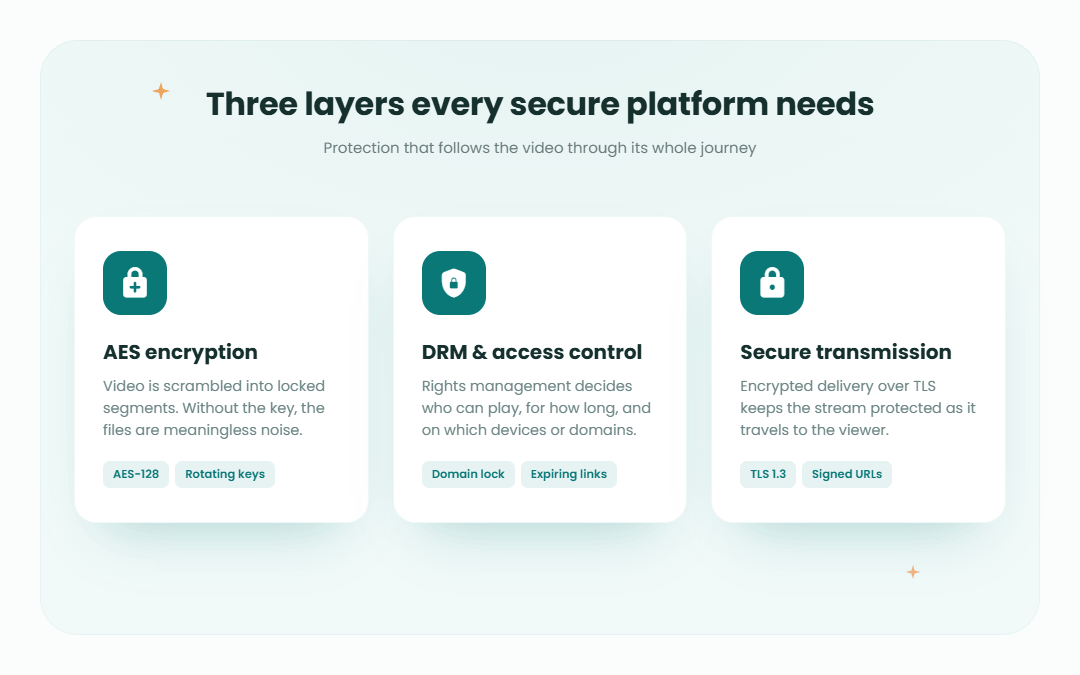
Secure video streaming depends on more than one protective layer. Strong platforms combine encryption, access controls, and secure delivery methods so content stays protected throughout playback.
At a minimum, secure platforms encrypt video data, control how streams are accessed, and protect content as it moves between servers and viewers. Some also include monitoring tools that help identify suspicious activity. Together, these features reduce the risk of unauthorized viewing and keep sensitive content from being copied or intercepted.
Understanding these core protections makes it easier to evaluate which platforms are built for secure streaming and which ones rely on lighter safeguards.
AES Encryption for Video Streams
AES encryption is one of the most widely used standards for protecting digital content. When video is encrypted with AES, it’s transformed into data that can’t be understood without the correct decryption key. Even if someone intercepts the stream, the video remains unreadable.
This type of encryption is trusted across industries because it’s reliable and difficult to break. Many major platforms use AES to protect training libraries, course content, and paid video. For viewers, it all happens behind the scenes. For content owners, it adds a strong layer of protection that helps keep video from being copied or misused.
Digital Rights Management (DRM)
DRM adds another layer of control on top of encryption. Instead of just protecting the stream, it sets rules around how a video can be used. That can include who’s allowed to watch, how long access lasts, and whether content can be downloaded or shared.
DRM is useful when videos are licensed, sold, or restricted to specific audiences. It helps prevent copying and limits playback to approved devices or users. While DRM can’t fully stop screen recording, many platforms pair it with tools like dynamic watermarks to discourage misuse and trace leaks if they happen.
Together with encryption, DRM helps content owners keep tighter control over where videos go and how they’re consumed.
Secure Transmission Protocols
Encryption only works if the video stays protected while it’s moving from server to viewer. That’s where secure transmission protocols come in. Protocols like HTTPS use SSL or TLS encryption to protect data as it travels, which helps prevent interception or tampering.
For streaming, this matters at every step. Video segments are delivered over secure connections so they can’t be altered mid-stream or redirected by unauthorized parties. Many modern streaming formats require secure protocols by default, which adds another layer of protection without affecting playback quality.
When encryption and secure transmission work together, video stays protected both in storage and in motion. That combination is key to delivering content safely at scale.
Popular Encrypted Video Streaming Technologies
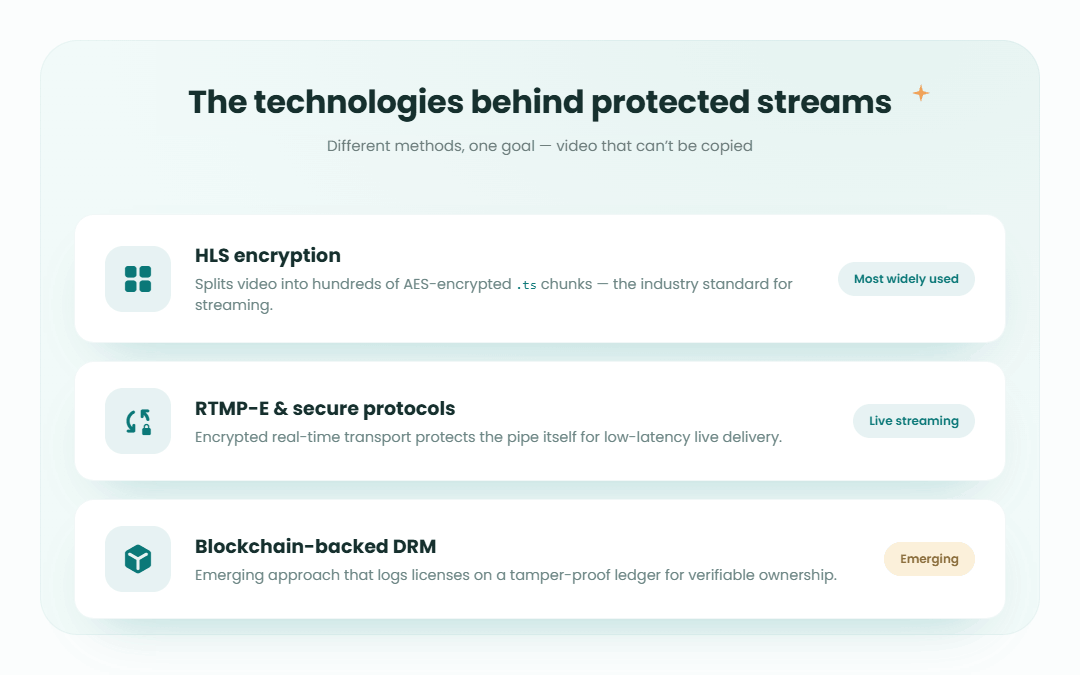
Encrypted streaming relies on a few core technologies that protect video during delivery and playback. Each one approaches security a bit differently, which is why many platforms combine them rather than relying on a single method.
Some technologies focus on how video segments are delivered. Others protect streams in real time or manage access rights at a deeper level. Understanding how these tools work makes it easier to see why certain platforms are better suited for secure viewing than others.
HLS Encryption
HLS encryption protects video by breaking it into small segments and encrypting each one before delivery. These segments are then streamed over secure connections, which helps keep the content protected while it’s in transit.
Most platforms use AES-based encryption with HLS and rotate encryption keys regularly. That makes it much harder for unauthorized viewers to reconstruct the full video, even if they intercept part of the stream. Because HLS works across most devices and browsers, it’s widely used for secure streaming at scale.
For content owners, HLS encryption offers a balance of strong security and reliable playback. For viewers, the experience stays smooth without added friction.
RTMP-E
RTMP-E is designed to secure live video streams as they’re being transmitted. It encrypts video data in real time, which helps prevent interception while a stream is in progress. This makes it useful for live broadcasts where content needs protection from the moment it goes live.
While RTMP-E is less common today than newer streaming methods, it still plays a role in certain workflows. It’s often used behind the scenes for ingesting live video before it’s converted into more modern formats for delivery. In those cases, encryption helps protect the stream during its most vulnerable stage.
Blockchain DRM
Blockchain-based DRM takes a different approach to content protection. Instead of relying on a single system to manage access rights, it records permissions and transactions on a decentralized ledger. That record can’t be easily altered, which adds transparency and accountability to how video rights are managed.
This setup helps content owners track who has access to a video and under what conditions. It also reduces the risk of tampering since access rules are verified across the network rather than controlled by one point of failure. While blockchain DRM is still evolving, it’s gaining traction for high-value content where ownership and access history matter.
Leading Secure Video Streaming Platforms in 2026
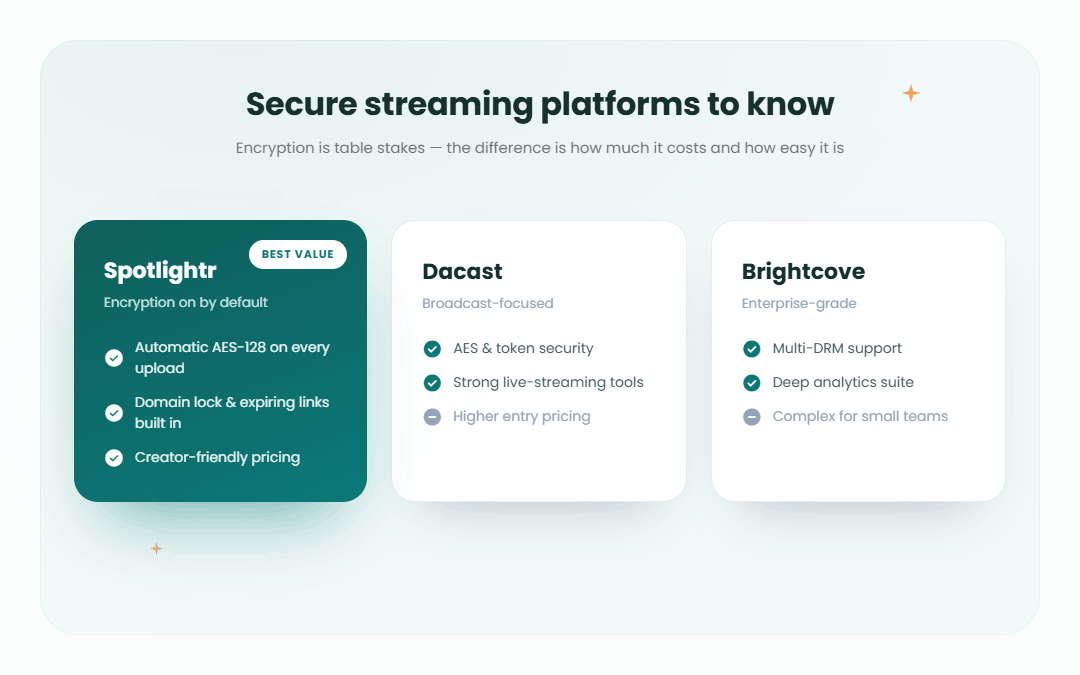
Strong encryption is only useful if the platform applying it is reliable. The leading secure streaming platforms pair encryption with access controls, monitoring tools, and stable delivery so protection doesn’t come at the cost of performance.
Spotlightr
Spotlightr combines encrypted streaming with access controls that are easy to manage. It supports HLS encryption, token authentication, and secure playback, which helps keep streams limited to approved viewers. These protections work for both live and on-demand video.
Where Spotlightr stands out is visibility. You can see how viewers interact with videos and spot unusual behavior without digging through complex reports. The platform also supports adaptive bitrate streaming, which keeps playback smooth while maintaining security. For teams that want strong protection without sacrificing usability, Spotlightr offers a balanced approach.
Dacast
Dacast is built for secure video delivery at scale. It uses AES encryption, token-based access, and HTTPS delivery to protect both live streams and on-demand content. These layers work together to limit unauthorized access while keeping playback reliable.
The platform also includes tools for managing paywalls, viewer access, and analytics from a single dashboard. That setup works well for organizations streaming private events, internal broadcasts, or paid video libraries. With a global CDN in place, Dacast balances security with performance so streams remain stable even during high traffic.
Brightcove
Brightcove focuses on secure video delivery for large organizations. It combines AES encryption, DRM, and secure key management to protect content across devices and regions. These protections are built into the platform rather than added on later, which helps maintain consistency at scale.
Beyond security, Brightcove supports detailed analytics and monetization workflows. Teams can control who sees content, track engagement, and distribute video to both internal and external audiences. For enterprises managing large libraries or global streams, Brightcove offers a structured approach to secure video delivery.
Enhancing Video Security with AI
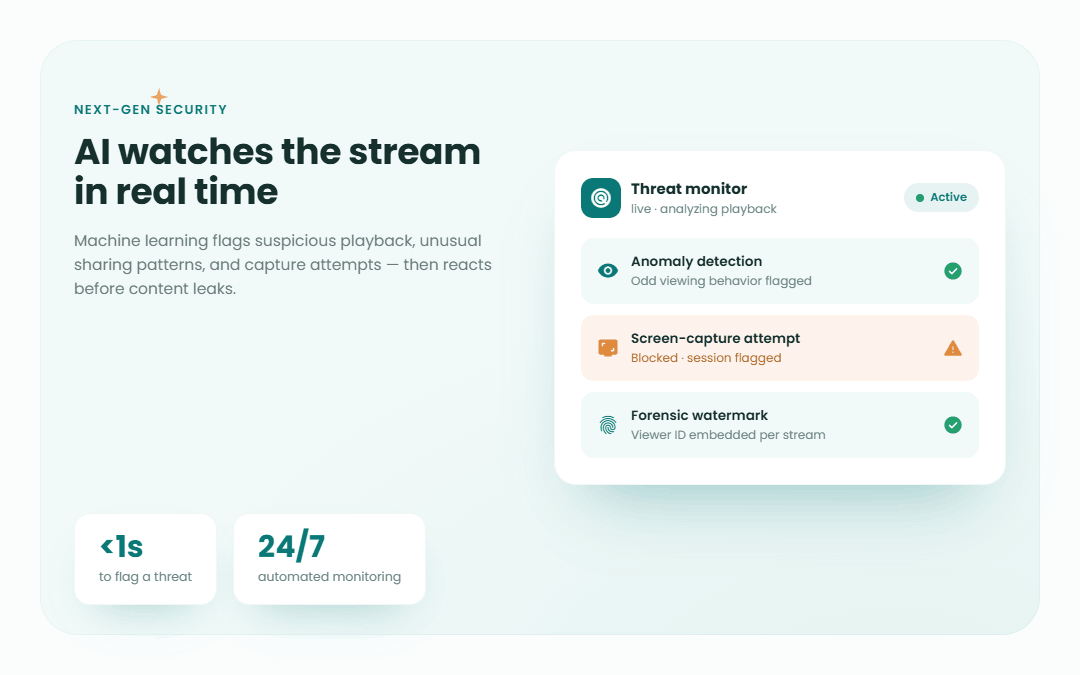
AI is changing how video security is handled. Instead of reacting after something goes wrong, platforms can now monitor streams in real time and flag unusual behavior as it happens. That might include sudden spikes in traffic, repeated access attempts, or viewing patterns that don’t match normal use.
When a potential issue is detected, AI systems can take action right away. They can block IP addresses, revoke access tokens, or alert administrators before content spreads further. Over time, these systems learn what normal behavior looks like, which helps reduce false alarms and focus on real threats.
By adding AI-driven monitoring to encryption and access controls, streaming platforms move from basic protection to active defense. That shift makes secure streaming more reliable without adding extra steps for viewers.
Best Practices for Secure Video Streaming
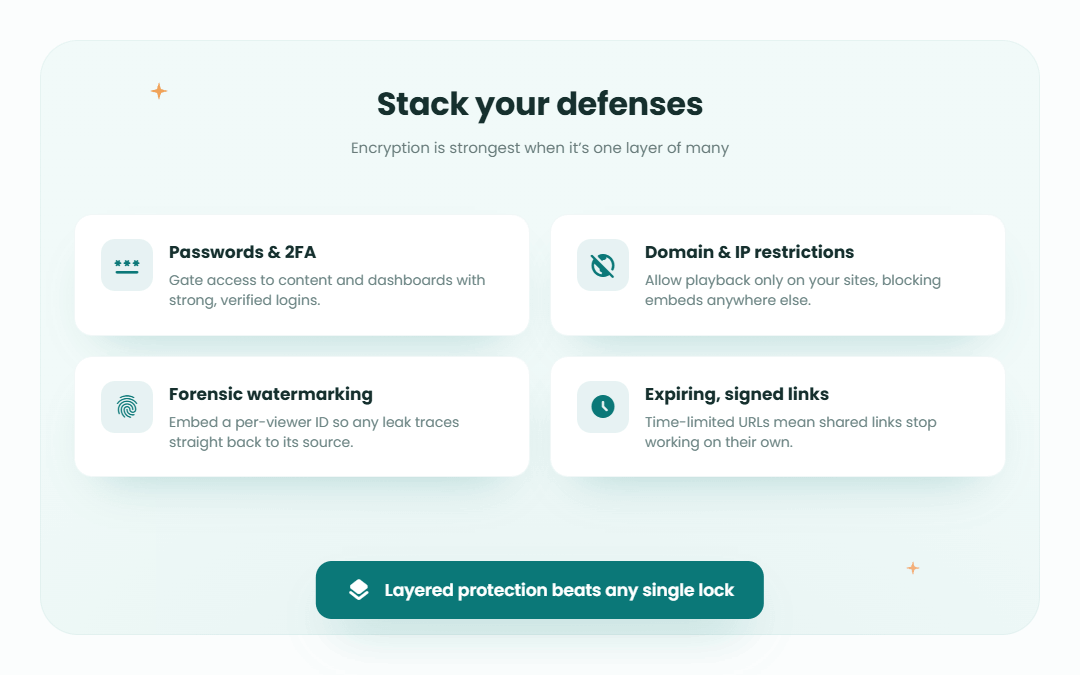
Strong security works best when it’s layered. Relying on a single protection method leaves gaps, even with encryption in place. The most reliable setups combine encryption, access controls, and monitoring so video stays protected at every stage.
Start with encryption for both storage and delivery. Pair that with DRM or token-based access so streams can’t be reused or shared freely. Limiting where videos can be played, such as approved domains or regions, adds another layer of control.
Regularly reviewing access settings matters, too. Expiring links, rotating keys, and monitoring usage help catch issues early. When these practices work together, secure streaming becomes part of the system rather than an afterthought.
Password Protection and Two-Factor Authentication
Password protection adds a basic gate around video content. It helps limit access, but on its own, it’s not enough. Passwords can be shared, reused, or exposed, which is why stronger setups pair them with additional controls.
Two-factor authentication adds that extra step. Viewers must verify access through a second method, such as a code or secure login. This makes it much harder for unauthorized users to get in, even if a password is compromised.
When password protection and two-factor authentication work together, access stays controlled without making playback difficult for approved viewers. It’s a simple upgrade that significantly strengthens overall video security.
Domain and IP Address Restrictions
Domain and IP restrictions help control where video content can be accessed. Domain restrictions limit playback to approved websites, which prevents videos from being embedded or shared elsewhere without permission.
IP address restrictions narrow access even further. You can allow viewing only from specific networks or locations, which is useful for internal teams or private environments. Some platforms also support geographic limits to block access from regions with higher piracy risk.
Together, these controls reduce exposure and keep video content tied to the places and people it’s meant for. They add protection without changing the viewing experience for authorized users.
Forensic Watermarking
Forensic watermarking adds an invisible identifier to each video stream. That identifier is unique to the viewer, which means content can be traced if it’s copied or shared without permission.
Unlike visible watermarks, forensic ones don’t affect playback or distract viewers. They sit quietly in the stream and only come into play if a video shows up where it shouldn’t. At that point, the watermark helps identify the source of the leak.
This approach doesn’t prevent misuse on its own, but it creates accountability. When paired with encryption and access controls, forensic watermarking acts as a strong deterrent and a useful tool for responding to piracy.
Getting Video Security Right
Encrypted video streaming is no longer a nice-to-have. It’s a practical requirement for protecting content that carries real value. From training libraries and paid programming to private broadcasts, encryption helps keep video from being copied, intercepted, or shared without permission.
Platforms like Dacast, Brightcove, and Spotlightr combine encryption with access controls, secure delivery, and monitoring tools to protect video throughout playback. When these protections are paired with best practices such as domain restrictions, two-factor authentication, and forensic watermarking, secure streaming becomes reliable rather than reactive.
As video continues to power communication and education, investing in encrypted streaming ensures content stays where it belongs and trust stays intact.
Frequently Asked Questions
What is encrypted video streaming?
Encrypted video streaming protects video content by encoding it so only authorized viewers can watch it. Even if a stream is intercepted, the video remains unreadable without the correct permissions or keys.
Why is encryption important for video streaming?
Encryption helps prevent piracy, unauthorized access, and data leaks. It also supports compliance with privacy and data protection standards, which is important for organizations sharing private or paid video content.
What’s the difference between encryption and DRM?
Encryption protects the video data itself, while DRM controls how that video can be accessed and used. Most secure platforms use both so content is protected during delivery and playback.
Is password protection enough on its own?
Password protection helps, but it’s more effective when paired with encryption, access tokens, or two-factor authentication. These added layers reduce the risk of passwords being shared or compromised.
Which platforms offer encrypted video streaming?
Platforms like Dacast, Brightcove, and Spotlightr support encrypted streaming with additional security features such as secure delivery, access controls, and monitoring tools.
Spotlightr Video Hosting For Your Course
Discover why Spotlightr is the #1 choice for course creators and e-learning professionals.
Register for a free 2 week trial, no credit card required.